We invest in how building itself changes.

A cheaper, faster, lower-carbon home depends on tools that need capital before they are proven and a buyer large enough to run them at volume. Hopewell has backed them since 2019 through Groundbreak Ventures, its construction-technology fund; Doorway is where they meet a pipeline big enough to prove them.

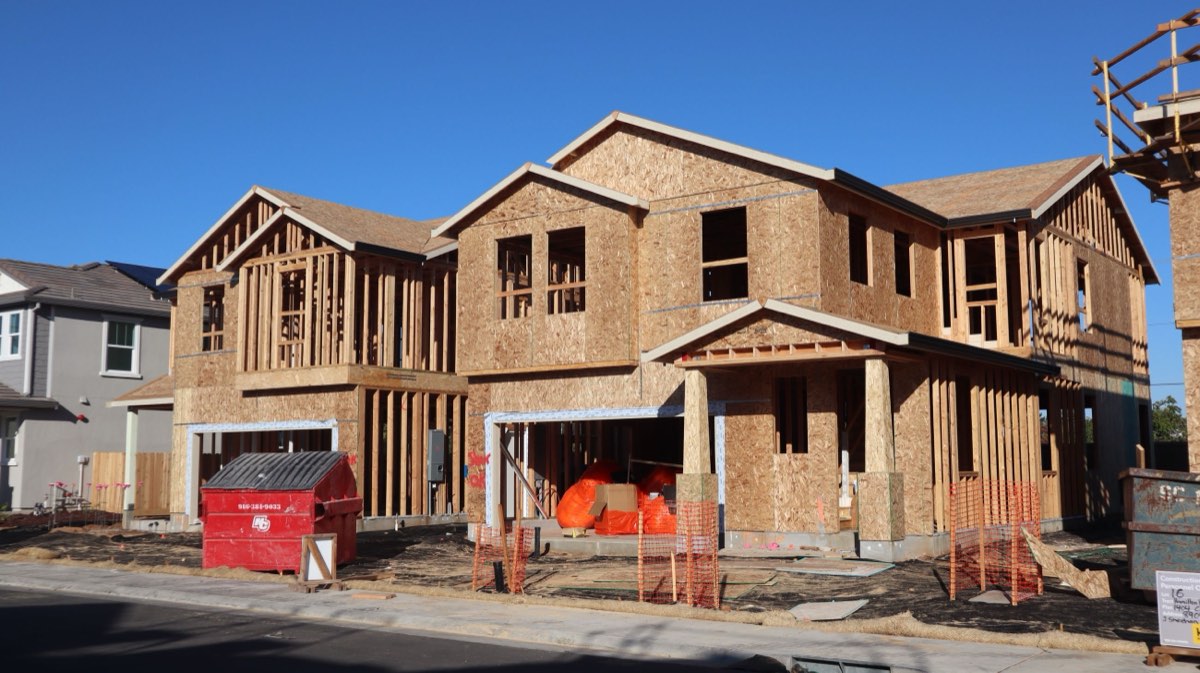
A row of new homes under construction, timber-framed
2019
backing building technology since, through Groundbreak Ventures
7
portfolio companies now supplying Build Canada Homes participants

Why we invest

Better homes need better tools, backed early.

Construction technology rarely fails on invention; the better method usually exists. What it lacks is capital patient enough to prove it and a buyer large enough to run the line full. Hopewell has supplied the first since 2019 through Groundbreak Ventures, led by Managing Partner Scott Kaplanis. Doorway supplies the second: a covenanted national pipeline that turns a promising method into a lower cost to build a home and to run it.

The portfolio

Where the money has gone.

01

Building better, and faster

The centre of the book is the tools that lower what a home costs to build. CABN builds net-zero homes off site. PakVille makes structural panels from recycled plastic. Crewscope and SiteMax lift the productivity of the crews and sites that assemble them. A national pipeline runs these at volume, so the saving compounds with each home.

02

Lowering the cost of living in the home

Affordability is paid for every month after a home is built. Adaptis plans the retrofits and energy work that cut a building's running cost. Public Grid enrols residents in energy and utility-bill programs through the lease. Enertiv runs a building's energy operations. Chexy lets a household pay rent and bills and build credit as they go.

03

Reading the neighbourhood

Whether a place is affordable to live in is decided as much by what surrounds it as by the unit itself. Local Logic maps the walkability, amenities, schools and transit that make a location liveable, across hundreds of millions of addresses: the data behind a community a household can afford to take part in, not only a home it can afford to rent.

The company they keep

Invested alongside the names that know the space.

Groundbreak invests beside the funds and operators that set the standard in each part of the stack, its own test of whether the technology is real.

  • Khosla Ventures and Air CanadaBacked Chexy's C$14M Series A (2026).
  • Building Ventures and MetaPropBacked Adaptis's seed round (2025); MetaProp is the proptech investor behind the affordability-as-payment thesis.
  • Investissement QuébecCo-led Local Logic's Series B (2023); Groundbreak led its Series A (2020).
  • ExelonPartnered with Public Grid (2026) to embed energy programs into leasing for owners of more than 500,000 units.
  • SourcesCompany announcements and newswire releases, 2020 to 2026. Dates carry the round they name.

Beyond our own deals

A platform for the sector, not only our own projects.

The same conviction runs wider than the fund. Hopewell and Groundbreak help build the institutions that move the whole sector forward.

What affordability really means
  • Centre for Housing InnovationCo-founded with Toronto Metropolitan University's DMZ, with $3.5M from FedDev Ontario, to take housing technologies from pilot to scale (2025).
  • CMHC Housing Supply ChallengeGroundbreak and the DMZ served as the Scaling Hub for the challenge's Level-Up round, supporting innovators across Canada (2024).

We do not wait for better building. We fund it.

The group's operating companies build the homes; a construction-technology fund lowers what they cost to build and to live in. Doorway is where the two meet a pipeline large enough to matter.

Build with us

See what this means for your side of the table.